
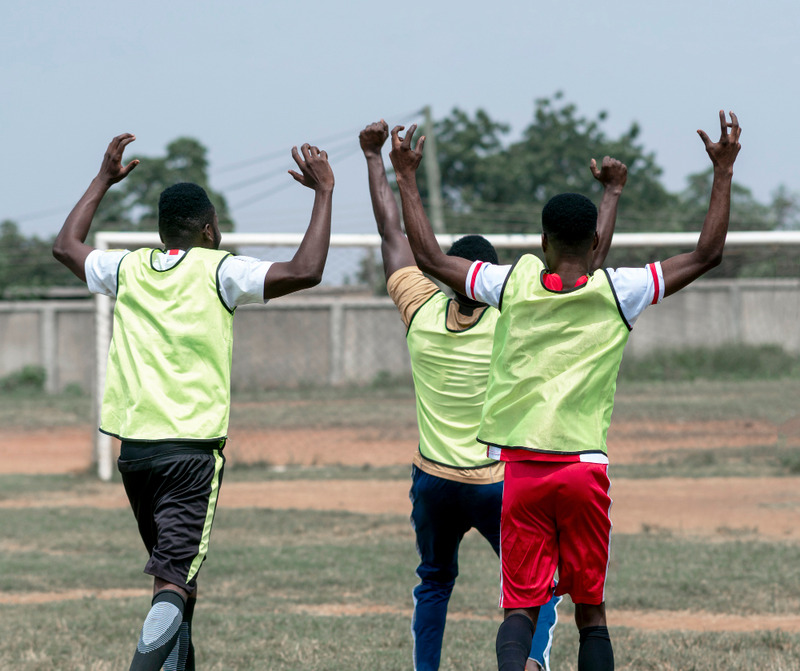
There is a moment somewhere between the roar of a crowd in Lagos and the silence before a penalty kick in Johannesburg when sport stops being a game and becomes something closer to religion. If you have never watched a football match at a packed stadium in Accra or listened to a boxing fight crackle through a transistor radio in a Nairobi neighborhood bar, you may not fully understand what sport means to people across the African continent. But travel here, sit among the fans, feel the heat and the noise and the hope, and you will understand almost immediately.
Africa is not a monolith. It is 54 countries, hundreds of languages, wildly different climates and cultures and histories. Yet sport in all its dusty, passionate, sometimes heartbreaking glory runs through the continent like a common thread. This is a story told not through statistics or governing bodies, but through the eyes of the people who love the games.
Football: The Undisputed King
Ask a sports fan anywhere in sub-Saharan Africa what they watch, and the answer is almost always the same: football. Not American football, not rugby football. The beautiful game. It is played on red-dirt pitches with makeshift goalposts in rural villages. It is watched in crowded bars on screens that flicker when the generator cuts out. It is argued about on every street corner, in every minibus, in every office.
The passion for European club football is remarkable in its intensity. In Dakar, you will find devoted supporters of Barcelona and Real Madrid who know the squad rotations better than some fans in Spain itself. In Kampala, Premier League mornings draw crowds to sports bars at 10 a.m. people who woke before dawn to be there for kickoff. Manchester United, Arsenal, Chelsea, Liverpool these clubs have vast and fiercely loyal followings across the continent, sometimes rivaling or even exceeding support for local teams.
But local football matters too, even if it operates in the shadow of European leagues. The Egyptian Premier League is one of the oldest and most competitive on the continent, with Al Ahly and Zamalek carrying the weight of national identity in every fixture they play. The Cairo derby is not merely a football match it is a civic event, a referendum on neighborhood pride, a collision of two worlds within the same city. The CAF Champions League, African football’s premier club competition, draws passionate support and increasingly decent television audiences, though it still fights for attention against Champions League nights in Madrid or Manchester.
Then there is the Africa Cup of Nations AFCON the continental championship that every football fan across Africa organizes their life around. When Egypt hosts, when Cameroon plays, when Senegal finally won the trophy in 2021 after years of heartbreak, the streets empty into stadiums and living rooms. The AFCON is imperfect, often under-resourced, sometimes chaotic in organization and yet it produces moments of sublime beauty and national euphoria that nothing else on the continent quite matches.
Cricket: A Southern and Eastern Passion
Move toward Southern and Eastern Africa and football’s dominance begins to face some competition. In South Africa, Zimbabwe, and Kenya, cricket is not merely a colonial remnant it is a deeply felt passion with a growing and increasingly diverse fan base.
South Africa’s return to international cricket after apartheid-era isolation produced some of the finest cricketers in the world and a nation that took enormous pride in their Proteas. The sight of a full Newlands crowd in Cape Town, Table Mountain looming behind the stands, is one of the great settings in world sport. Fans here debate batting averages and bowling line-ups with the same fervor that their Lagos counterparts debate the Premier League.
The rise of franchise T20 cricket, fast, loud, commercially driven, has done more than anything else to bring younger fans into the game. Matches that are finished in an evening, with music and cheerleaders and fireworks, fit the rhythms of modern African urban life in a way that a five-day Test simply does not. Cricket is slowly, deliberately, reaching audiences it never historically served.
For African sports fans who want to be closer to the action, Melbet offers a wide range of betting markets across football, cricket, rugby, and athletics bringing even more excitement to every match, every race, and every moment that makes sport on the continent unforgettable.
Boxing and Athletics: Africa’s Global Champions
If football is what Africans watch most, athletics and boxing may be where African talent most consistently dominates the world. And fans know it.
East Africa ; Kenya and Ethiopia in particular has produced a lineage of long-distance runners so extraordinary that their success has reshaped how the world understands human athletic potential. Eliud Kipchoge, the Kenyan marathon runner who broke the two-hour barrier in 2019, is not simply a national hero, he is a continental icon, a figure whose image appears on murals and phone cases from Nairobi to Kigali. When he runs, people across East Africa stop and watch, feeling something that is difficult to articulate but goes beyond ordinary sports fandom. It is closer to pride : a deep, complicated, expansive pride.
Boxing has deep roots across the continent. Nigeria, Ghana, and South Africa have produced world champions in multiple weight classes over the decades, and the sport retains enormous popularity. In Lagos market stalls, you will still find posters of old champions next to current contenders. The fights that matter particularly when a homegrown fighter is competing for a world title draw the kind of attention that transcends sport and becomes national news.
Rugby: Complicated, Growing, Beloved
Rugby occupies a unique and sometimes uncomfortable position in the African sports landscape. In South Africa, it carries the heavy historical baggage of having been, for much of the 20th century, a sport associated with white Afrikaner culture and political power. The Springboks , the national team , were a symbol of apartheid-era exclusion for millions of South Africans.
And yet the story of South African rugby since 1994 has been one of the most compelling in world sport. The 1995 Rugby World Cup, hosted at home and won by South Africa in front of a newly democratic nation, is the stuff of legend , the moment Nelson Mandela donned a Springbok jersey is one of the most reproduced images in modern African history. More recently, the Springboks have continued to win World Cups and have slowly, imperfectly, become more representative of the country’s demographics. Fans who once watched with ambivalence now watch with genuine pride.
Rugby is also growing in East Africa . Kenya’s sevens team has long been a force on the world circuit, and their matches draw raucous, joyful crowds who follow the game with knowledge and passion.
What the Fan Experience Actually Feels Like
Strip away the analysis and what remains is the texture of actually being a sports fan in Africa and it is unlike anywhere else on earth.
It is watching the World Cup in a bar in Accra with sixty strangers who become, by halftime, something close to family. It is the sound of vuvuzelas, which South Africa gave to the world during the 2010 FIFA World Cup and which the world has never quite gotten over. It is waking at 4 a.m. in a Nairobi apartment to watch a Champions League semi-final on a phone with a cracked screen because the data is cheaper at night. It is children playing football barefoot on red earth, imagining they are Sadio Mané or Didier Drogba.
It is fathers and sons and mothers and daughters gathered around screens that may flicker, in homes that may be modest, watching athletes who look like them compete on the largest stages in the world. And increasingly as African football continues to export talent to European leagues, as African runners continue to rewrite record books, as African nations build better infrastructure and host larger events the fan’s pride is grounded in genuine, recurring excellence.
Sport in Africa is not always well-funded. Governance is often corrupt. Infrastructure frequently disappoints. But the love loud, generous, enduring never does.