
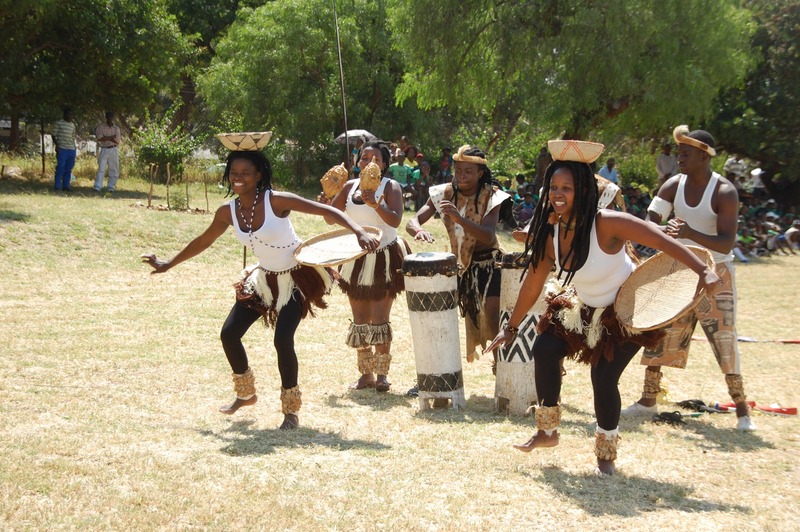
Africa is a continent of extraordinary diversity — home to over 50 nations, thousands of ethnic groups and an incredibly rich tapestry of cultural traditions. Among the most fascinating expressions of this diversity are the traditional games and sports that have been played across the continent for centuries, passed down from generation to generation as living embodiments of African history, values and community spirit. From ancient board games to wrestling traditions, from racing games to martial arts, Africa’s sporting heritage is as deep and varied as the continent itself.
Mancala — The Ancient Board Game of Strategy
Few games in human history can claim the longevity and geographical reach of Mancala. Believed to be one of the oldest board games ever created, with evidence suggesting it may date back as far as 7,000 years, Mancala is played in virtually every corner of Africa under dozens of different names and variations. In East Africa it is known as Bao, in West Africa as Oware or Ayo, in Ethiopia as Gebeta, and in South Africa as Morabaraba.
Despite its many regional variations, the basic concept remains consistent across all versions. Players take turns picking up seeds, stones or shells from hollowed-out pits carved into wood or stone — or simply dug into the ground — and distributing them around the board according to specific rules, with the objective of capturing more pieces than the opponent. The game demands strategic thinking, forward planning and the ability to anticipate an opponent’s moves several steps in advance.
Mancala is far more than a pastime. In many African cultures, it is a deeply social activity that brings communities together, facilitates conversation between elders and young people, and serves as a vehicle for transmitting strategic thinking skills and cultural values from one generation to the next. The game has been declared a UNESCO Intangible Cultural Heritage in several countries, recognising its profound cultural significance.
Laamb — The Sacred Wrestling of Senegal
In Senegal, wrestling is not merely a sport — it is a sacred cultural institution that occupies a central place in national identity. Laamb, the traditional Senegalese wrestling style, combines elements of physical combat with elaborate spiritual rituals, making it one of the most unique and captivating sporting traditions anywhere in the world.
Laamb matches are extraordinary spectacles. Before any physical contact takes place, wrestlers undergo elaborate pre-match rituals overseen by marabouts — spiritual advisors — who perform ceremonies designed to protect their fighter and weaken the opponent through mystical means. Wrestlers cover themselves in protective amulets and potions, perform elaborate dances and chants, and invoke the protection of their ancestors before stepping into the sand arena. More sports at https://betzambia.org/
The wrestling itself combines traditional grappling techniques with open-hand strikes — a feature that distinguishes Laamb from most other wrestling traditions globally. Victory is achieved by forcing the opponent to touch the ground with any part of the body other than the feet. The best wrestlers in Senegal are celebrated as national heroes, earning fame and fortune that rivals the most successful athletes in any other sport. Laamb tournaments fill enormous stadiums, attract massive television audiences and generate excitement across the entire country.
Nguni Stick Fighting — The Warrior Tradition of South Africa
Among the Nguni peoples of South Africa — including the Zulu, Xhosa and Ndebele — stick fighting has been a fundamental part of cultural life for centuries. Known as Dlala Induku in Zulu, this martial art traditionally served as both a method of training young men in combat skills and a way of resolving disputes without resorting to lethal violence.
Practitioners use two sticks — one for attacking and one for defending — and compete to strike their opponent while avoiding being struck themselves. The techniques involved require years of practice to master, combining quick footwork, precise timing and a sophisticated understanding of attack and defence patterns. Young men traditionally begin learning stick fighting as boys, gradually developing their skills under the guidance of experienced elders.
Today, stick fighting competitions are held across South Africa as both a sporting event and a cultural celebration. The skills involved are considered an important connection to ancestral traditions, and efforts are being made to preserve and promote the practice among younger generations who might otherwise lose touch with this important aspect of their cultural heritage.
Dambe — The Ancient Boxing Art of West Africa
Originating among the Hausa people of northern Nigeria and Niger, Dambe is one of Africa’s oldest and most distinctive martial arts. Traditionally associated with butchers’ guilds — who would travel between communities performing Dambe fights during harvest festivals — this ancient boxing style has survived for centuries and is now experiencing a remarkable revival across West Africa.
Dambe fighters wrap their dominant hand — known as the “spear hand” — in rope or cloth to create a hardened striking surface, while the other hand and the legs are used for defence and balance. The objective is to knock the opponent down or cause them to touch the ground with any body part other than their feet. Fighters are divided into weight categories and compete in rounds, with matches often decided by a single devastating strike from the dominant fist.
In recent years, Dambe has gained significant attention beyond West Africa thanks to social media and international broadcasting, with organisations like the Dambe Warriors promoting the sport to global audiences. The combination of its ancient origins, its spectacular fighting style and its deep cultural roots make Dambe one of Africa’s most compelling traditional sports.
Ngolo — The Ancestor of Capoeira
One of the most fascinating stories in African sporting history is the connection between Ngolo — a traditional acrobatic martial art practiced by the Cimba people of Angola — and the Brazilian martial art of Capoeira. Scholars believe that enslaved Africans transported to Brazil brought Ngolo with them, and that this practice evolved over centuries into what we now know as Capoeira — one of the most recognised martial arts in the world.
Ngolo is performed during the Efundula ceremony — the female initiation rite of the Mucubal and Muvila peoples — where young men compete in acrobatic combat to win the right to choose a wife from among the newly initiated women. The combat style is characterised by flowing, dance-like movements, acrobatic kicks and sweeps, and a constant circular motion that makes it both mesmerising to watch and extremely difficult to defend against.
The recognition of Ngolo’s connection to Capoeira has generated enormous interest in Angola’s traditional martial arts, with efforts underway to document and preserve these practices before they disappear entirely from living memory.
Morabaraba — The Strategy Game of Southern Africa
While Mancala dominates much of Africa’s board game tradition, Southern Africa has its own distinctive strategic game in the form of Morabaraba, played primarily in South Africa, Lesotho and Zimbabwe. Known in different regions as Umlabalaba or Twelve Men’s Morris, this two-player game is played on a board of three concentric squares connected by lines, with each player controlling twelve pieces.
The objective is to form “mills” — lines of three pieces — which allow a player to remove an opponent’s piece from the board. The game progresses through three phases: placing pieces, moving pieces and, when reduced to three pieces, jumping freely around the board in a last desperate attempt to form mills and survive. The strategic depth of Morabaraba rivals chess in its complexity, and skilled players can spend hours engaged in a single match of extraordinary tactical intricacy.
South Africa has officially recognised Morabaraba as a national sport, and organised competitions are held regularly across the country, keeping this ancient tradition alive for new generations of players.
Taekwondo Africa — The Continent’s Olympic Journey
While the games described above represent Africa’s indigenous sporting traditions, it is worth noting the continent’s remarkable embrace of modern competitive sports. African nations have made significant strides in Olympic and international competition, particularly in athletics, boxing and increasingly in sports like taekwondo.
The African Taekwondo Union has worked tirelessly to develop the sport across the continent, and African athletes have begun making their mark on the international stage. This blend of ancient tradition and modern competitive sport reflects the broader story of African culture — a continent that honours its past while confidently embracing the future.